
What was actually wrong
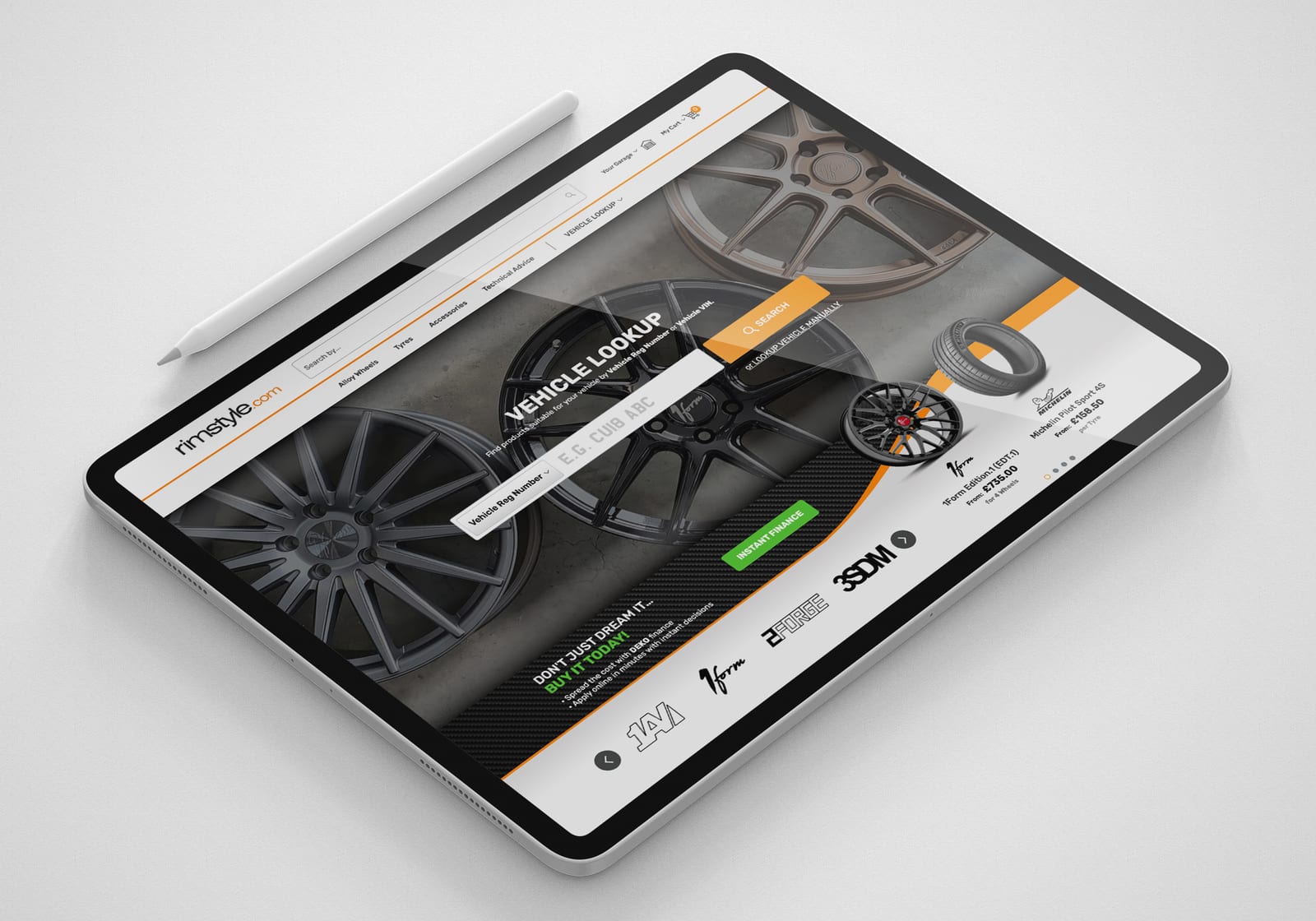
Rimstyle needed a commerce platform that supported the Automotive & parts business model and the trading patterns of its customers.
This was not a brochure storefront. Buyers arriving for a specific item needed enough product information and context to identify it with confidence, while stock, account pricing and purchase history had to support the same buying decision.
Order flow, stock and customer data crossed several back-office systems, so integration boundaries and operational handoffs likely shaped how the platform was built.
Stock was not one flat number. Depot location, availability and fulfilment context had to remain meaningful so customers and order teams could rely on what the platform showed.
Business customers also needed the platform to reflect how they buy: parent and child account relationships, repeat purchase, order history, account documents and the correct pricing and stock context.
Account-led ordering and self-serve buying had to live on the same stack without one audience compromising the other.
The platform change also depended on product information being structured, enriched and governed well enough to support the catalogue. Product data was a major workstream within the wider commerce delivery, not a separate outcome claim.
What was at stake
Unclear product, pricing or fulfilment information can create friction before an order is placed.
Most relevant to Automotive & parts teams running B2C and marketplace operations and weighing similar platform decisions.
If catalogue and operational data drift, buyers can lose confidence in product information, pricing, stock and purchase history. That can delay or abandon an order, while internal teams absorb the uncertainty through manual checking and customer service.
For repeat buyers and trade accounts, uncertainty creates friction every time an order is placed again. Wrong-part risk, unclear account terms and a harder repeat-order path can frustrate buyers and move the burden back to account teams and support.
Once a buying habit moves elsewhere it is expensive to win back. The consequence of inaction is not dramatic; it is cumulative.
Five things, in order.
- 01Mapped the buying journey before the interfaceStarted with how customers actually order here: account relationships, repeat-buy patterns and the operational context behind each purchase. Purchase history, documents and parent-child account behaviour had to support the journey rather than sit outside it.
- 02Rebuilt the commerce foundation around how the business operatesRebuilt the commerce foundation around the operational logic the business already depended on, without resetting what already worked.
- 03Brought product data into one governed workstreamProduct information, enrichment and catalogue structure were treated as a delivery workstream that enabled the commerce change. Technical data and downloads had to remain connected to the product context buyers used to identify the right item.
- 04Scoped the rules per audience, not per platformAccount-led ordering and self-serve buying were shaped as distinct journeys on the same foundation. Local catalogue, depot, inventory, delivery and pricing rules had to remain coherent for the buyer context in front of the screen.
- 05Moved the project into support with the operating context intactHandover preserved the operational decisions made during build, so support could keep moving the platform forward without re-learning the business.
Platforms and integrations

Difficult parts
Results
In the client's words
iWeb delivered digital transformation across Rimstyle's operations to create a more effective, streamlined, and scalable model. Our collaboration spanned multiple services including; application development, infrastructure, testing, blockchain, and improved business intelligence.”
Ongoing support
The project did not end when the platform went live.
Support mattered because the automotive and parts still depended on parts data, pricing imports, account behaviour, inventory feeds, integrations and customer-facing information after launch.
Keeping the build decisions and system ownership visible gave the support team a clearer basis for tracing issues and maintaining the connected trading system after launch.
Projects with a similar shape

A car care commerce platform rebuilt around product discovery, seasonal demand and checkout flow.
Car care retail supported by stronger seasonal sales, checkout activity and reduced returns.

An industrial materials platform built around specialist products, global trading and checkout.
Specialist material sales supported by stronger traffic, mobile engagement and checkout activity.

A battery trade portal built around product recommendations, fitment data and repeat ordering.
Battery purchasing supported by stronger mobile journeys and more efficient pricing workflows.